 How-to
How to Earn Passive Income With an ATM
Last Updated: November 2, 2026
Quick Summary
You can earn passive income with ATM machines by collecting a surcharge fee every time someone withdraws cash, with a well-placed machine estimated to generate $500 to $1,000 per month. After processing, connectivity, maintenance, insurance and site commission costs, net profit runs roughly $300 to $800 per machine.
- An ATM's main income is the surcharge fee customers pay per withdrawal; interchange income is a smaller bonus.
- An ATM is a cash business first: you must load your own cash before it earns anything.
- Best locations are cash-heavy venues like bars, laundromats, car washes and gas stations, not just high-traffic spots.
- Get the revenue share, term and exit clause in writing; handshake deals are the most common way operators lose money.
- Owner-operated machines cost least but take the most time; managed placement means the least workload and smallest share.
Table of Contents
- How Does an ATM Business Make Money?
- What ATM Business Startup Costs Look Like
- How to Find ATM Locations That Actually Pay
- ATM Cash Loading and Replenishment, Explained
- Running the Numbers: Realistic Profit Scenarios
- Security, Fraud, and Compliance Basics
- Request a Free ATM Placement Through DCATMP
- Frequently Asked Questions
How Does an ATM Business Make Money?
Learning how to build passive income with ATM machines starts with one fact: the machine earns a fee every time someone takes out cash. An ATM business makes money mainly from surcharge fees that customers pay per withdrawal. A well-placed machine is estimated to generate $500 to $1,000 per month, according to VettedBiz's ATM franchise guide. That range is an estimate, not a promise. Location decides almost everything.
Surcharge Fees and Interchange Income
The surcharge is the fee a customer sees on screen and agrees to pay. That fee is the main income source, according to NationalLink's ATM revenue overview. Interchange income is a smaller second stream. It comes from the card networks when a transaction runs through them. ATMTrader notes that independent operators may receive small interchange income on top of surcharges (ATMTrader's operator guide). Do not build a budget on interchange alone. Treat it as a bonus.
So the math is simple: fee per withdrawal × withdrawals per month. Everything else in this guide builds on that formula.
What ATM Business Startup Costs Look Like
Startup costs come in three parts: the machine, the cash inside it, and the setup work. You can buy a machine outright or get one placed at no upfront cost through a placement program. The second cost is the one people forget. An ATM is a cash business before it is a profit business. You must load it with your own cash before it earns a dime.
Budget for these items:
- ATM equipment or a placement agreement
- Initial cash float for each machine
- Installation and connectivity setup
- Processing and monitoring fees
- Insurance and routine maintenance
We recommend asking for a quote before you commit, so you can compare real numbers instead of guesses. Pricing depends on your location and volume, so visit the DCATMP website for current prices or to request a quote.
How to Find ATM Locations That Actually Pay
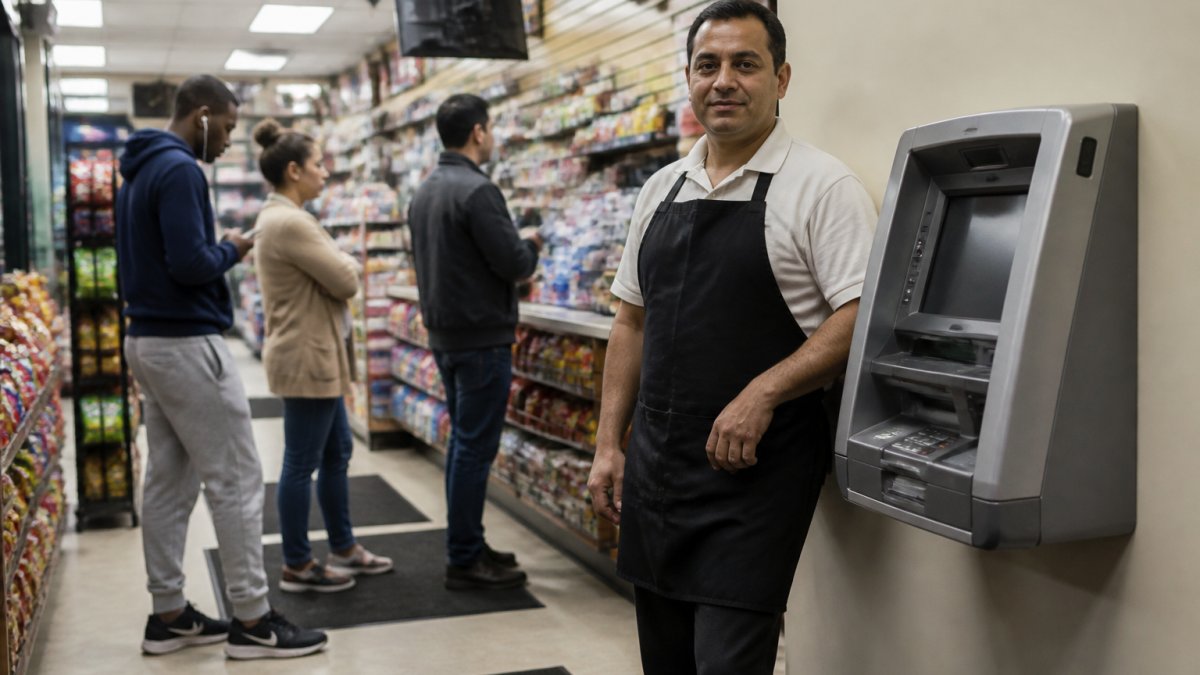
The best ATM locations are places where people still use cash and pass through often. High foot traffic alone is not enough. VendBuddy warns against average locations, long payback periods, and the myth of truly passive income (VendBuddy's ATM ownership warnings). Venues with persistent cash use pay. Venues with steady card use do not.
Hunt in these spots:
- Convenience stores and gas stations
- Bars, clubs, and late-night venues
- Laundromats and car washes
- Festivals, fairs, and event venues
- Casinos, arcades, and cash-heavy retail
Then run due diligence before signing anything:
- Ask the location owner for current cash-withdrawal volume
- Confirm the placement agreement length and exit terms
- Check who pays for installation, power, and repairs
- Verify the site commission or revenue share in writing
- Watch the site at different hours for two weeks
Watch out: a handshake deal with no written placement agreement is the most common way new operators lose money. Get the revenue share, term, and exit clause in writing.
ATM Cash Loading and Replenishment, Explained
Cash loading and replenishment is the recurring job of refilling the machine before it runs empty. An empty ATM earns nothing, and it frustrates the location owner. This is also the part of the business that most contradicts the word "passive," so it deserves an honest accounting.
What a Replenishment Cycle Actually Involves
A single refill is not one step. A typical cycle looks like this:
- Pull the transaction and cash-level report from your processor or monitoring portal.
- Withdraw cash from your business bank account (or a vault service) in the denominations the machine dispenses.
- Travel to the site, often during business hours, sometimes after close for bars and late-night venues.
- Open the machine, swap or top off the cassette, and log the starting count.
- Reconcile the cash removed against the transaction log before you leave or that evening.
- Deposit or re-vault the withdrawn cash and update your cash-flow sheet.
Cash Float and Working-Capital Planning
The float is the cash sitting inside the machine plus the reserve you keep on hand to refill it. Plan it in three layers:
- In-machine float: enough to cover the days between refills at peak volume.
- Reserve fund: one to two refills' worth held in a safe or business account so a surprise busy weekend does not empty the machine.
- Seasonal buffer: event venues, beach towns, and holiday retail can spike 2-3x. Build the buffer before the season, not during it.
Remote Monitoring and Outsourced Loading
Remote monitoring makes this easier. Fiserv's ATM Solutions case study describes automated fault detection and resolution that keeps a network available without manual checks. Use the same idea: let software tell you when cash runs low, then send a loader.
You have three operating models, and each changes the workload:
- Owner-operated: lowest cost, highest time commitment. You load, reconcile, and troubleshoot.
- Hybrid: you own the machine but pay a vault or armored service to load and reconcile. Cost rises, time falls.
- Managed or placement: a company owns and services the machine and pays you a commission or placement fee. Least control, least workload, and the smallest per-transaction share.
Be skeptical of any pitch that calls a machine "fully passive" while you still own the cash inside it. If your money is in the cassette, you carry the float risk, the reconciliation work, and the loss exposure.
Keep these habits:
- Track withdrawals per machine every week
- Set a low-cash alert at a fixed dollar level
- Keep a reserve fund for emergency refills
- Reconcile cash counts after every load
- Log refill time and cost so you can price your own labor honestly
Running the Numbers: Realistic Profit Scenarios
Here is where most guides get vague. We will not. The table below starts with the $500 to $1,000 per month gross surcharge estimate from VettedBiz's ATM franchise guide and then subtracts the costs that actually come out of that revenue. These are illustrations built from common industry cost ranges, not forecasts. Your processor quote, site commission, and transaction volume will move every line.
| Line item | Quiet site | Solid site | Busy site |
|---|---|---|---|
| Monthly withdrawals | ~250 | ~375 | ~500 |
| Surcharge per withdrawal | $2.00 | $2.00 | $2.00 |
| Gross surcharge revenue | $500 | $750 | $1,000 |
| Interchange (small, variable) | $5-$15 | $10-$25 | $15-$35 |
| Processing / switch fees | -$25 to -$50 | -$35 to -$65 | -$50 to -$90 |
| Connectivity (cellular or site internet share) | -$15 to -$30 | -$15 to -$30 | -$15 to -$30 |
| Maintenance and parts reserve | -$15 to -$40 | -$20 to -$50 | -$25 to -$60 |
| Insurance | -$10 to -$25 | -$10 to -$25 | -$10 to -$25 |
| Site commission or rent | -$50 to -$100 | -$75 to -$150 | -$100 to -$200 |
| Estimated net before taxes | ~$300-$400 | ~$500-$600 | ~$650-$800 |
Site commission, processing fees, and connectivity are recurring costs that should be confirmed in writing before you sign. Review the due diligence checklist above.
Payback and Cash Float Math
The cash float is not a cost, but it is capital you cannot spend elsewhere, and it determines your payback period. A rough planning rule most operators use: hold enough cash to cover one full replenishment cycle plus a buffer for a surprise busy weekend.
Divide your total capital outlay (machine cost if you buy, plus float, plus installation) by monthly net profit to see how quickly passive income with ATM equipment arrives.
Security, Fraud, and Compliance Basics
Security and compliance protect the cash and the business. Fraud at an ATM usually means card skimming, chargebacks, or internal cash theft. Each one is preventable with basic controls.
Start with these:
- Inspect the card reader and keypad daily for tampering
- Use tamper-evident seals on the cash cassette
- Reconcile every load against the transaction log
- Keep the machine in a camera-monitored, well-lit spot
- Follow your processor's rules for disputes and reporting
Also confirm your placement agreement covers who is liable if cash goes missing. That single clause saves arguments later.
Request a Free ATM Placement Through DCATMP
DCATMP offers free ATM placement with full installation, maintenance, and repair, plus 24/7 support. We have over 20 years of experience, and we work with no long-term contracts and no cancellation fees. That means you can test a location without tying up capital in a machine.
Here is how to start:
- Tell us about your location and expected foot traffic
- We confirm placement and installation details
- The machine goes in, and we handle upkeep
- You earn from every withdrawal
Ready to learn more? Request a quote and we will walk you through the options.
Frequently Asked Questions
How much can you earn from owning an ATM?
Actual earnings depend on transaction volume at your location, your surcharge fee, and your operating costs. High-traffic venues with persistent cash use perform at the top of that range, while average locations may fall short of it. Net profit is what remains after surcharge revenue, interchange income, cash float, and maintenance costs are accounted for.
How often does an ATM need to be restocked and maintained?
Restocking frequency depends on transaction volume at the site. A busy location may need cash replenishment several times a week, while a slower venue might last a week or more. Remote monitoring and transaction alerts let operators track cash levels without visiting the machine. Maintenance covers receipt paper, minor repairs, and software updates. Managed placement services handle cash loading and replenishment for you, which removes most of the hands-on work.
What costs should you expect when starting an ATM business?
ATM business startup costs typically include equipment, cash float, installation, connectivity, and processing fees. Equipment and installation can be avoided entirely through a free placement program, where the provider owns and maintains the machine. The biggest working capital item is the cash float needed to stock the machine before it generates profit. Budget for cash replenishment cycles and any site commission or revenue share paid to the location owner.
How do you find a profitable location for an ATM?
Look for venues where cash use is persistent: convenience stores, bars, restaurants, laundromats, and entertainment venues with high foot traffic. Ask the location owner about daily customer counts, existing payment habits, and whether a competing ATM is nearby. A placement agreement should spell out the revenue share or site commission, who handles cash loading, and how the machine is maintained. DCATMP offers free ATM placement with full installation, maintenance, and repair for qualifying businesses.
Cash still moves through plenty of businesses, and a well-placed ATM turns that foot traffic into monthly income. The catch is doing the location math and the cash float right. DCATMP handles the equipment, installation, maintenance, and 24/7 support so you can focus on your store. Get started with DCATMP and turn your counter into a steady revenue stream.