 blog
blog
Low Fee Credit Card Processing: 2026 Guide
Table of Contents
- What Low Fee Credit Card Processing Actually Costs in 2026
- Credit Card Processing Fees Comparison: What to Look For
- How to Reduce Credit Card Processing Fees Without Switching Providers
- The Cheapest Way to Accept Credit Card Payments for Small Business
- Zero-Fee Credit Card Processing: Surcharging, Cash Discounts, and Compliance
- How to Calculate Your Effective Rate and Read a Processing Statement
- Choosing a Low Fee Credit Card Processing Partner: Contracts, Support, and Long-Term Costs
- Conclusion
- Frequently Asked Questions
Last Updated: October 16, 2026
What Low Fee Credit Card Processing Actually Costs in 2026
Low fee credit card processing keeps the total cost of accepting cards as close to the underlying interchange rate as possible, usually through interchange-plus pricing or a subscription model. DCATMP has over 20 years of experience helping businesses see what they actually pay per swipe.
A processor advertises a low percentage, then layers on per-transaction, statement, and compliance fees that never appear in the pitch.
Breaking Down the Real Cost of a Transaction
Every card payment carries three costs: interchange, set by the card networks and paid to the issuing bank; the assessment fee, charged by the network; and the markup, the processor's cut and the only negotiable part.
Most businesses focus on the advertised percentage and ignore the fixed per-transaction fee, where small-ticket businesses get hurt. On a $4 coffee, a 10-cent fee is a 2.5% charge on top of everything else.
Why Advertised Rates Rarely Match Your Statement
Advertised rates assume a perfect transaction: a customer taps a plain debit card in person. Real life brings rewards cards, keyed-in orders, and online checkouts, all of which cost more.
Credit Card Processing Fees Comparison: What to Look For
A credit card processing fees comparison should focus on four numbers: the percentage markup, the per-transaction fee, the monthly fee, and any PCI compliance fee. But it only works if you translate those into a total monthly cost at your actual volume, not the volume the sales rep assumes.
| Pricing Model | How It Works | Best For | Watch Out For |
|---|---|---|---|
| Interchange-plus | Cost + fixed markup | High volume, mixed cards | Monthly and statement fees |
| Flat-rate | One rate for all cards | Low volume, simplicity | Higher cost on debit cards |
| Subscription | Flat monthly fee, near-cost processing | Predictable volume | Monthly fee regardless of sales |
| Tiered | Rates grouped by card type | Rarely anyone | Bundled, hard-to-audit rates |
Interchange-Plus vs. Flat-Rate vs. Subscription Pricing
Interchange-plus pricing passes the true interchange cost through and adds a transparent markup, rewarding high volume and a healthy mix of debit cards.
Flat-rate pricing charges one percentage for every card, in person or online. It is simple and predictable, but you pay for that simplicity on every debit transaction.
Subscription pricing replaces the per-transaction markup with a monthly fee.
Apples-to-Apples Cost Examples at Real Volumes
Advertised rates are useless without volume context. These illustrative examples use commonly seen fee structures, not quotes.
Example 1, Coffee shop, $15,000/month, $6 average ticket (2,500 transactions)
- Interchange-plus at cost + 0.20% + $0.10: roughly $225 in markup plus interchange
- Flat rate at 2.6% + $0.10: roughly $390 + $250 = $640 in total fees
- Flat-rate costs more because the fixed $0.10 per transaction hits 2,500 times
Example 2, Online retailer, $50,000/month, $75 average ticket (667 transactions)
- Interchange-plus at cost + 0.30% + $0.10: roughly $150 in markup plus interchange
- Flat rate at 2.9% + $0.30: roughly $1,450 + $200 = $1,650 in total fees
- The gap narrows on larger tickets because the fixed fee is spread across more dollars
Example 3, Service business, $8,000/month, $400 average ticket (20 transactions)
- Interchange-plus at cost + 0.25% + $0.10: roughly $20 in markup plus interchange
- Flat rate at 2.9% + $0.30: roughly $232 + $6 = $238 in total fees
- At low transaction counts, the percentage rate dominates and the fixed fee barely matters
The pattern is consistent: high transaction counts punish flat-rate and per-transaction fees, while high average tickets reward lower percentage markups. Run your own numbers before comparing quotes.
The Fees That Never Make the Comparison Table
Two processors can quote the same markup and still produce different effective rates because of fees outside the rate sheet:
- Monthly or statement fee: commonly $5 to $25 per month
- PCI compliance fee: commonly $0 to $15 per month, sometimes billed annually
- Gateway fee: commonly $0 to $25 per month for online processing
Add those to your monthly total before deciding which quote is cheaper. A processor with a 0.10% higher markup but no monthly, PCI, or batch fees can win at low volume, and lose badly at high volume.
How to Compare Quotes Without Getting Played
When you request quotes, ask each processor for the same three things in writing:
- The exact markup over interchange and the per-transaction fee
- Every recurring fee, including PCI, statement, gateway, and minimums
- The contract length, cancellation terms, and any early termination fee
A quote that will not put those three items on paper is a pitch, not a quote.
How to Reduce Credit Card Processing Fees Without Switching Providers
You can lower your processing costs before changing providers. Call your current processor and ask for a rate review, markups are negotiable far more often than businesses assume.
Next, tighten your transaction handling:
- Batch out daily instead of letting transactions sit
- Fix keyed-in errors that force card-not-present rates
- Ask customers for debit instead of credit where it fits
The Cheapest Way to Accept Credit Card Payments for Small Business
For a small business, the biggest lever is not the processor but how you take the payment: a card-present tap costs far less than a keyed-in number, and an ACH payment for a recurring bill costs less than either.
With steady volume, the math favors a transparent markup over a bundled rate; low, unpredictable volume often does better with a flat monthly structure.
Zero-Fee Credit Card Processing: Surcharging, Cash Discounts, and Compliance
Zero-fee credit card processing shifts the card cost to the customer through a surcharge or a cash discount.
A surcharge adds a fee to credit card transactions at checkout. A cash discount lowers the price for cash payers and leaves card prices unchanged.
- Surcharges are capped and must be disclosed before the sale
- Debit cards generally cannot be surcharged
- Cash discounts must be offered to all customers, not just some
Check the rules that apply to your state and card network before you build a zero-fee program into your pricing.
How to Calculate Your Effective Rate and Read a Processing Statement
Your effective rate is total processing cost divided by total card sales for the same period, the only number that tells you what you actually pay.

The Effective Rate Formula
Pull three figures from your monthly statement: total fees, total card sales, and total transaction count. Divide total fees by total card sales for your effective rate.
Effective rate = Total fees ÷ Total card sales
Example: $1,200 in fees on $40,000 in card sales = a 3.0% effective rate.
You can also divide total fees by total transactions for a per-transaction effective cost, useful when comparing a flat-rate quote (high per-transaction component) against interchange-plus (low).
Reading the Statement Line by Line
A processing statement is organized in layers, each hiding a different cost. Read it in this order:
- Interchange, the fee paid to the card-issuing bank. Set by the card networks and not negotiable. It varies by card type, whether the card is present, and whether the transaction is keyed or swiped.
- Assessments, the fee charged by the card network itself (Visa, Mastercard, Discover, American Express). Also not negotiable, but small relative to interchange.
- Markup, the processor's cut. The only part you can negotiate, and where the real comparison happens.
- Incidental fees, monthly, statement, PCI, gateway, batch, minimum, and chargeback fees. These sit outside the rate and are easy to miss.
If your statement does not separate interchange, assessments, and markup, you are on a bundled or tiered model. Ask for a cost-plus or interchange-plus statement instead, a processor that will not provide one is telling you how much markup is buried in the bundle.
The Avoidable Charges Audit
Once you can see the layers, audit for charges you can eliminate:
- Downgrades: transactions that fall out of the best rate tier because of how they were processed. Keyed-in numbers, missing AVS data, and delayed batching are common causes. Fixing them can move transactions back into a lower-cost category.
- Batch timing: batching once daily instead of multiple times a day reduces per-batch fees and can improve settlement speed.
- PCI compliance fee: often avoidable by completing the annual self-assessment questionnaire. If you are paying it and not completing the questionnaire, you are paying for nothing.
A Worked Example
Suppose your statement shows $1,200 in total fees on $40,000 in card sales, broken down as:
- Interchange: $720
- Assessments: $60
- Markup: $300
Your effective rate is 3.0%. Non-negotiable cost (interchange + assessments) is $780, or 1.95%. Negotiable markup plus incidental fees is $420, or 1.05%, the number to attack through negotiation, a pricing-model change, or a provider switch.
Run this exercise every quarter, effective rates drift as your card mix changes, and last year's competitive rate may not be this year's.
Choosing a Low Fee Credit Card Processing Partner: Contracts, Support, and Long-Term Costs
Choosing a low fee credit card processing partner comes down to contract terms and support, not the headline rate.
Ask three questions before you sign:
- Is there a cancellation fee, and how much is it?
- Is the contract month-to-month or multi-year?
- Who answers the phone at 2 AM on a Sunday?
That last question matters more than most owners expect, a payment issue at midnight is a lost sale by morning.
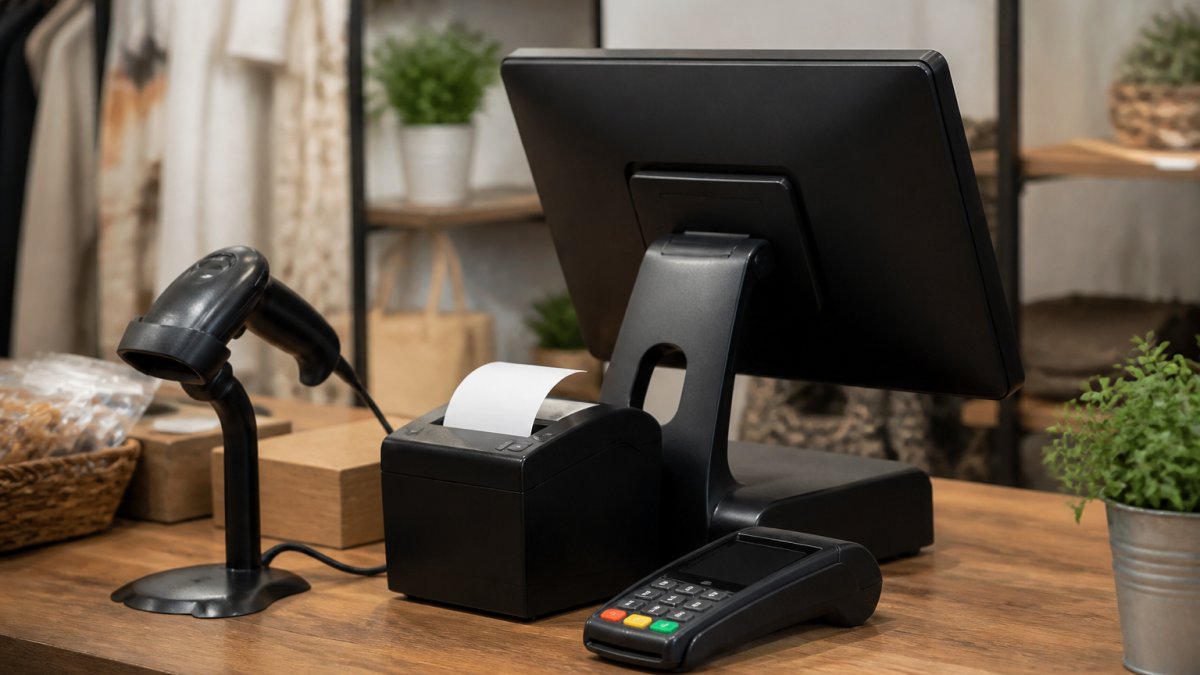
Long-term costs also include hardware. Free terminals and a touchscreen POS system remove an upfront cost many providers push onto the business, for qualifying businesses, there is no upfront equipment cost.
Conclusion
The hardest part of lowering your processing costs is not finding a cheaper rate. It is seeing the true cost hidden inside your statement. DCATMP helps businesses cut through that with transparent interchange-plus pricing, no long-term contracts, no cancellation fees, and free POS hardware for qualifying businesses. We also handle crypto payment integration and free ATM placement. Request a quote from DCATMP and see what your real effective rate could be.
Frequently Asked Questions
Is there a way to avoid credit card processing fees entirely?
You cannot eliminate the interchange fees that card networks set, but you can offset them. Surcharging adds a fee to credit card transactions, while cash discounting offers a lower price for cash payments. Both require compliance with card network rules and state laws. Zero-fee credit card processing programs typically use one of these models. Some providers also offer no monthly fee and no long-term contract options that lower your overall cost.
Are flat-rate or interchange-plus processing fees cheaper?
It depends on your monthly sales volume and average transaction size. Flat-rate pricing is simpler but usually costs more per transaction because the provider builds in a buffer. Interchange-plus passes through the actual interchange fee plus a fixed markup, which often saves money for businesses processing over $10,000 per month. For low-volume businesses, flat-rate can be more predictable. Ask for a side-by-side estimate using your real numbers.
How do I compare credit card processing fees between providers?
Request a full fee schedule, not just the headline rate. Look at per-transaction fees, monthly fees, PCI compliance fees, chargeback fees, and cancellation fees. Then calculate your effective rate by dividing total fees by total sales volume. A provider advertising 2.6% may cost more than one at 2.9% once you add statement fees and equipment charges. Always ask about contract terms and setup fees before signing.
Can a small business pass credit card processing fees on to customers?
Yes, in most states you can surcharge credit card transactions or offer a cash discount, but rules vary. Card networks cap surcharges (typically at 3% for credit cards) and prohibit surcharging debit card transactions. You must notify customers clearly before checkout. Some states restrict surcharging entirely, so check your local regulations. Cash discounting is often simpler because you post one price and offer a lower price for cash.