 blog
Credit Card Processing for Small Business: A 2026 Guide
Table of Contents
- How Credit Card Processing Works for Small Businesses
- Understanding Small Business Payment Processing Fees
- Payment Methods and Channels: In-Person, Online, and Mobile
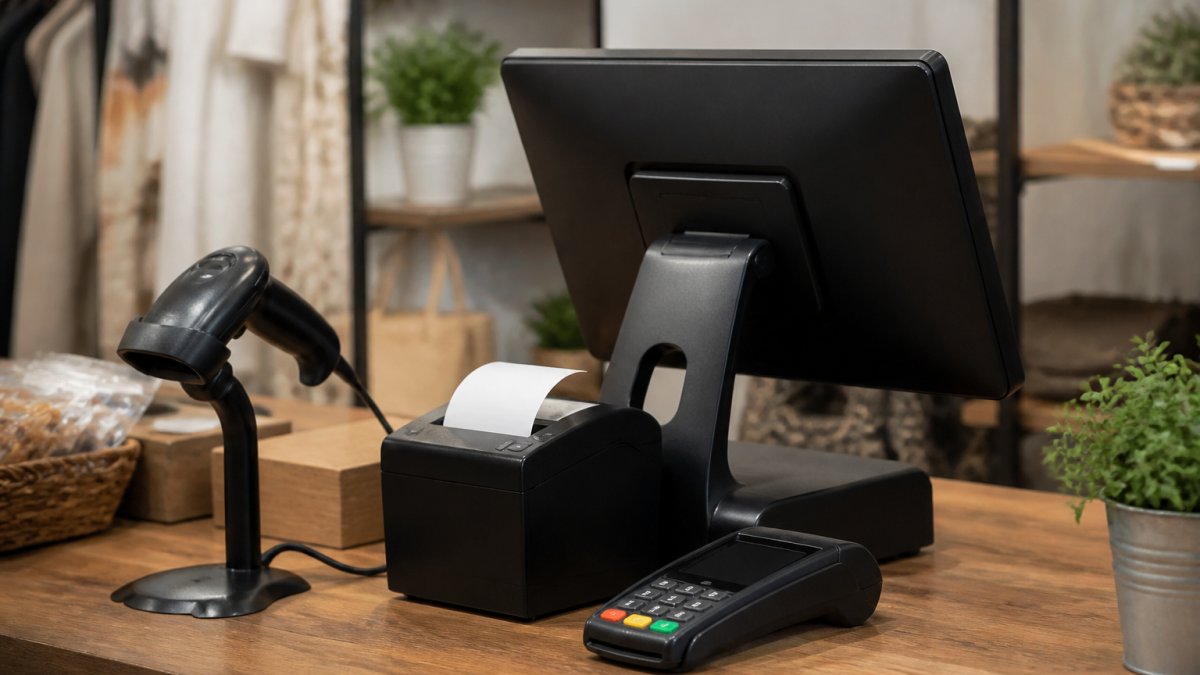
- Credit Card Processing Equipment for Small Business
- How to Accept Credit Card Payments for a Small Business
- Finding the Cheapest Credit Card Processing for Small Business
- Choosing the Right Processor: Key Factors Beyond Price
- Frequently Asked Questions
Last Updated: October 19, 2026
How Credit Card Processing Works for Small Businesses
Credit card processing lets your business accept payment cards.
Your processor captures the card data and sends it to the card network (Visa, Mastercard, American Express), which routes it to the customer's bank for approval.
At DCATMP, we handle this infrastructure, payment gateway, terminal hardware, and backend processing, so you can focus on running your business.
The key players are your payment processor, the card networks, acquiring banks, and issuing banks. Each takes a small cut, which is why processing fees exist.
Understanding Small Business Payment Processing Fees
There's no single processing fee, several stack together, and the only fair comparison is adding them all up for your own sales profile.
The four layers of a processing cost are:
- Interchange fees. Set by the card networks and paid to the issuing bank. They vary by card type, card presence, and entry method. Interchange is the largest component of most transactions and is not negotiable.
- Assessment fees. Charged by the card networks themselves (Visa, Mastercard, American Express, Discover) on top of interchange. These are small per-transaction and percentage amounts set by each network.
- Processor markup. What your payment processor adds on top of interchange and assessments. This is the part that actually varies between providers and the part you can negotiate.
- Ancillary fees. Monthly account, gateway, PCI compliance, statement, batch, chargeback, retrieval, and hardware costs. Individually small, collectively capable of doubling your effective rate at low volume.
Worked example: what a $100 sale actually costs
Assume a $100 in-person sale on a standard consumer rewards card. A typical all-in cost breaks down like this:
- Interchange: about $1.80-$2.00
- Network assessments: about $0.14-$0.20
- Processor markup at interchange-plus pricing: about $0.10-$0.30
- Total: roughly $2.05-$2.50, or an effective rate of about 2.05%-2.50%
The same $100 sale through a flat-rate processor quoting 2.6% + $0.10 costs $2.70, higher than interchange-plus here, but simpler to predict. On a basic debit card, flat-rate can beat interchange-plus; on a premium rewards card, interchange-plus usually wins.
Worked example: monthly cost at two volume levels
Take a business processing $15,000 per month in about 300 transactions averaging $50 each.
- Flat-rate at 2.6% + $0.10: $390 in percentage fees + $30 in per-transaction fees = $420/month, before any monthly or PCI fees.
- Interchange-plus at interchange + 0.20% + $0.10: interchange and assessments on a typical mix might run about 1.95% of volume ($292.50), plus 0.20% markup ($30), plus $0.10 per transaction ($30) = $352.50/month, plus a typical $10-$25 monthly fee.
At $15,000 in volume, interchange-plus is often modestly cheaper, but only if the monthly fee is low and the markup thin. At $5,000 in monthly volume, the monthly fee eats most of the savings.
The pricing models, compared honestly
- Flat-rate. A fixed percentage plus a fixed per-transaction amount, the same for every card. Easy to budget and compare, and usually best under roughly $10,000-$15,000 in monthly volume. You pay a small premium for simplicity.
- Interchange-plus. Interchange and assessments passed through at cost, plus a fixed markup. The most transparent model and usually the cheapest at scale, but the statement is more complex and the monthly fee matters. Best for businesses processing consistently above roughly $15,000-$25,000 per month.
- Tiered. Transactions are bucketed into "qualified," "mid-qualified," and "non-qualified" rates; the headline rate applies only to the qualified bucket. Hard to compare, ask for the effective rate on your actual card mix.
- Subscription or membership pricing. A flat monthly fee (often $0-$50) plus a low per-transaction rate, sometimes with hardware included. Attractive for very low volume or seasonal businesses, but check the per-transaction rate as volume grows.
Fees that surprise small businesses
- Chargeback fees. Typically $15-$25 per dispute, win or lose, on top of the reversed sale.
- PCI compliance fees. A monthly or annual fee, plus possible non-compliance penalties if your setup fails a scan.
- Batch and statement fees. Small monthly charges for settling transactions and delivering statements.
- Gateway fees. Common for online payments, often $10-$30 per month.
- Early termination fees. Can run several hundred dollars or more if you leave a multi-year contract early.
- Funding-speed fees. Instant or next-day deposits usually cost extra versus standard settlement.
At DCATMP, we break down exactly what you're paying and why, interchange, markup, and ancillary fees shown separately, so you know your cost per transaction before you sign up.
Payment Methods and Channels: In-Person, Online, and Mobile
Customers want to pay their way, so you need to accept payments across three channels: in-person, online, and mobile.

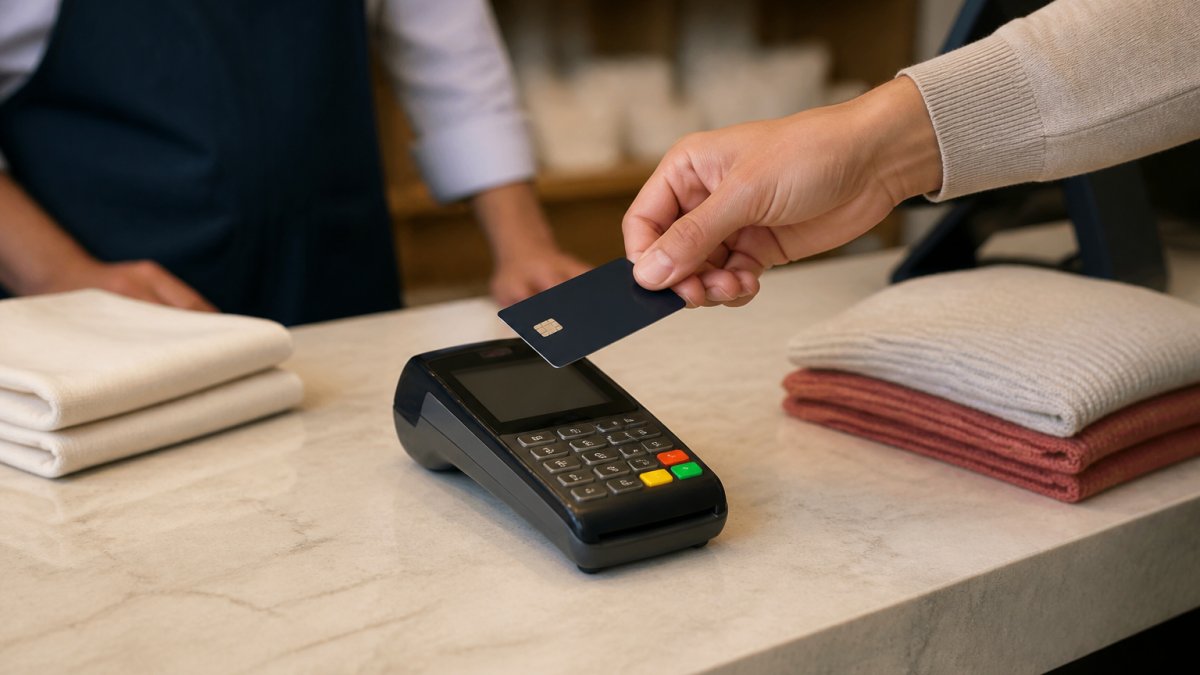
In-person payments use a terminal or card reader connected to your point-of-sale system. Customers insert, swipe, or tap.
Online payments flow through a payment gateway on your website, where customers enter card details at checkout. This requires a secure connection and proper encryption.
Mobile payments use a reader connected to a smartphone or tablet, ideal for pop-up shops, food trucks, and service calls.
Many processors limit you to one or two channels.
Credit Card Processing Equipment for Small Business
Your payment equipment is your connection to the payment network and a critical customer-experience tool.
Traditional countertop terminals are stationary checkout-counter devices, reliable and familiar, but limited to one location.
Integrated POS systems combine processing with inventory management, customer data, and reporting, pricier upfront but time-saving if you manage multiple functions.
Mobile payment stands hold a tablet and reader for a semi-permanent setup. These work well for pop-up shops or service businesses.
Many processors charge for hardware or lock you into long-term contracts.
How to Accept Credit Card Payments for a Small Business
Setting up credit card processing is straightforward with the right processor.
Step 1: Choose a processor. Research options for your business type and sales volume.
Step 2: Apply for a merchant account. This is your account with the processor.
Step 3: Set up your equipment. The processor ships your terminal or card reader.
Step 5: Go live. Once testing is complete, you're ready to accept real payments.
The entire process from application to first payment usually takes 3-5 business days.
Common mistakes include choosing a processor without understanding your actual costs, signing long-term contracts, or selecting equipment that doesn't match your workflow.
Finding the Cheapest Credit Card Processing for Small Business
Cost matters, but the cheapest headline rate is rarely the cheapest processor. The right question is: which pricing model produces the lowest total cost for my volume, average ticket, and card mix?
Step 1: Build your cost formula
Your true monthly cost is:
Total cost = (effective percentage rate × monthly volume) + (per-transaction fee × number of transactions) + monthly fees + annual fees ÷ 12 + hardware cost ÷ 12 + expected chargeback fees
Most owners skip the last four terms. At low volume, those terms dominate.
Step 2: Match the pricing model to your sales profile
A common pattern across the industry:
- Under about $10,000 per month in volume. Flat-rate pricing is usually the lowest total cost because monthly and gateway fees on interchange-plus accounts outweigh the markup savings.
- About $10,000-$25,000 per month. The break-even zone. Run both quotes through the formula above; the winner often depends on your average ticket and card-present mix.
- Above about $25,000 per month. Interchange-plus almost always wins, provided the markup is thin and the monthly fee is modest. At this volume, a 0.30% difference in markup is worth $900 per year on $300,000 in volume.
- High average ticket, low transaction count (for example, a contractor billing $2,000 jobs). Percentage rate dominates, negotiate the markup, not the per-swipe fee.
- Low average ticket, high transaction count (for example, a coffee shop at $8 per ticket). Per-transaction fees matter a lot. A $0.10 per-transaction difference across 5,000 monthly transactions is $500 per month.
- Highly seasonal businesses. A subscription or low-monthly-fee plan can beat a plan with a $25 monthly fee during off-months.
Step 3: Compare quotes on the same basis
Ask each processor for a written quote that shows:
- The effective rate on your actual card mix, not the qualified rate.
- Every monthly, annual, gateway, PCI, and statement fee.
- The per-transaction fee and whether it applies to refunds and voids.
- Chargeback and retrieval fees.
- Hardware cost, lease versus purchase, and what happens at contract end.
- Contract length, early termination fee, and cancellation notice period.
Step 4: Price the things that are not on the rate sheet
- Funding speed. Standard settlement is typically 1-2 business days. Next-day or instant funding usually costs extra, sometimes 1%-2% of volume.
- Contract terms. Month-to-month agreements usually cost slightly more per transaction than multi-year contracts, but they let you leave when service degrades. A $500 early termination fee is a real cost, not a footnote.
- Reserves and holds. Higher-risk businesses may face a rolling reserve (often 5%-10% of volume held for 90-180 days) or a temporary hold after a spike in sales. That is cash you cannot use, and it belongs in your cost comparison.
- Chargeback exposure. A processor with strong dispute tools and clear chargeback fees can save more than a slightly lower rate.
Step 5: Know when to renegotiate or switch
Re-run the comparison whenever your monthly volume changes by roughly 50%, your card mix shifts, or your contract comes up for renewal. Switching processors is usually a two-to-four-week project: get the new account approved, run both systems in parallel for a statement cycle, migrate saved cards and recurring billing, update your website and terminals, then cancel the old account in writing.
DCATMP operates on month-to-month terms with no cancellation fees, so you are not trapped if you find a better fit, and we will show you the effective rate on your own numbers before you sign up.
Choosing the Right Processor: Key Factors Beyond Price
Price is important, but it's not the only factor when selecting a credit card processing company for small business.
Support availability. Can you reach someone when you need help?
Integration capability. Does the processor integrate with your existing systems?
Payment method flexibility. Modern customers expect options: credit cards, debit cards, digital wallets, ACH transfers, and increasingly cryptocurrency.
Contract flexibility. Long-term contracts mean you're stuck even if the processor's service degrades or a better option emerges.
Scalability. Your processor should grow with your business.
Industry expertise. Different business types have different needs. A restaurant needs different features than an online store.
Passive income opportunities. Some processors offer additional revenue streams like ATM placement, gift card programs, or rewards programs.
Frequently Asked Questions
What is the cheapest credit card processor for a small business?
The most affordable processor depends on your transaction volume and sales channels. Flat-rate pricing works best for low-volume businesses, while interchange-plus models favor high-volume operations. Compare total monthly costs, including transaction fees, monthly minimums, and equipment charges, rather than rate alone. Request quotes from multiple providers to see which aligns with your business profile.
Do I need a merchant account to accept credit card payments?
Yes, a merchant account is required to process credit card payments. A payment service provider (PSP) or merchant services company establishes this account with your bank and card networks. Some providers bundle merchant accounts with their payment gateway and POS system, simplifying setup. Others require you to open an account separately. Either way, you cannot accept card payments without one.
How fast can I get funding after a credit card processing company processes my payments?
Funding speed varies by processor and your business profile. Standard settlement typically occurs within 1-3 business days, though some providers offer next-day or same-day funding for an additional fee. Factors affecting timing include your transaction volume, industry type, and chargeback history. Confirm funding timelines before switching providers, especially if your cash flow depends on quick access to revenue.
What hidden costs should I watch for when comparing credit card processing companies?
Beyond transaction fees, watch for setup fees, monthly minimums, chargeback fees, PCI compliance fees, early termination penalties, and equipment costs. Some providers bundle these; others charge separately. Request an itemized fee schedule from each provider. Long-term contracts can lock you in; prioritize processors with month-to-month terms or no cancellation fees so you can switch if rates or service decline.
The right credit card processing company for small business is the one that matches your specific situation. For most small businesses, DCATMP delivers the combination of transparent pricing, flexible terms, and comprehensive support that makes payment processing simple. Request a quote today to see how we can streamline your payment operations and help you focus on growing your business.