 how-to
Passive Income From ATM Machines: A 2026 Guide
Last Updated: October 23, 2026
Quick Summary
Passive income from ATM machines works through surcharge fees charged to users and revenue sharing with business owners where you place machines. A well-placed ATM typically generates $200 to $700 per machine monthly after expenses and revenue sharing, though this depends heavily on location foot traffic and transaction volume.
- A used ATM machine costs $2,000 to $3,500 with installation adding $500 to $1,500, requiring $4,300 to $5,600 total startup investment
- Monthly operating costs run $125 to $300 per machine for processing fees, connectivity, maintenance, and cash handling
- ATM ownership is semi-passive requiring 1-2 hours weekly per machine for cash loading, monitoring, and maintenance
- High-traffic venues like bars, nightclubs, and casinos generate 200+ transactions monthly while quiet offices generate only 20-30
- Revenue splits typically give location owners 20-35% of surcharge fees while you keep 60-80% after processor costs
Table of Contents
- How ATM Owners Earn Passive Income From ATM Machines
- How Much Can One ATM Make Per Month
- ATM Business Startup Costs and Initial Investment
- How to Find ATM Locations That Generate Consistent Revenue
- ATM Cash Loading and Management Essentials
- Is ATM Business Ownership Actually Semi-Passive Work
- Getting Started: Your Action Plan for ATM Business Success
- Frequently Asked Questions
How ATM Owners Earn Passive Income From ATM Machines
Passive income from ATM machines works through two straightforward revenue streams. First, you collect surcharge fees every time someone withdraws cash. Second, you negotiate a revenue share with the business owner where you place the machine.
The appeal is clear: minimal daily work, steady cash flow, and low startup costs. But here's what most guides get wrong, it's not truly passive. You'll handle cash loading, monitor transactions, and manage occasional maintenance.
Surcharge fees: Your primary revenue stream
Your main income comes from the transaction fee charged to ATM users.
According to ATM Trader's 2026 analysis, a well-placed ATM generates $500 to $1,000 per month in transaction fees alone.
The fee structure works like this:
- User withdraws cash and pays the surcharge
- Your ATM processor takes a small cut
- Network fees reduce your take by 5-10%
Location matters enormously. A machine in a busy bar generates far more transactions than one in a quiet office lobby.
Revenue sharing with location partners
Most ATM placements include a revenue-share agreement with the business owner. You place the machine free of charge, and they get a cut of your surcharge fees (usually 20-35%).
This arrangement benefits both parties. The business owner earns passive income without buying equipment. You gain access to high-traffic foot traffic.
How Much Can One ATM Make Per Month
Real earnings depend on transaction volume and location quality. The numbers vary widely, which is why location validation matters before you buy.
Real earnings from verified case studies
According to ATM Trader's 2026 business overview, ATM owners typically net $200 to $700 per machine per month at steady locations after expenses and revenue sharing.
A more ambitious example comes from Business Insider's March 2026 feature: one couple operated five ATMs alongside three vending machines and split approximately $1,500 in monthly profit across both businesses. The ATM contribution wasn't isolated, but this shows the income potential when machines are well-placed.
An entrepreneur featured by UpFlip scaled to over 80 machines in high-traffic locations, generating approximately $35,000 per month across the portfolio.
Factors that determine your monthly revenue
Transaction volume is the primary driver. A machine that processes 150 transactions monthly at $2.50 average surcharge generates $375 in gross revenue (before splits and fees).
These factors shift your earnings up or down:
- Location foot traffic: Bars, nightclubs, and casinos drive 200+ transactions monthly. Quiet offices might see 20-30.
- Transaction amount: Users withdrawing $100 pay the same surcharge as those withdrawing $20. Higher average withdrawal amounts don't increase your fee, but they indicate wealthier clientele who use ATMs more often.
- Operating expenses: Connectivity fees, processing costs, and maintenance reduce net profit by 15-25%.
ATM Business Startup Costs and Initial Investment
Starting an ATM business requires capital for equipment and initial cash float. The good news: startup costs are lower than most small businesses.
Equipment and installation expenses
An ATM machine itself costs $2,000 to $3,500 for a used unit or $4,000 to $6,000 for new equipment.
Installation and setup add another $500 to $1,500, depending on electrical work and network connectivity requirements.
Many entrepreneurs buy used machines to reduce initial investment. Used units work well if they're from reputable sellers and have been properly maintained.
Here's a typical startup budget:
| Item | Cost |
|---|---|
| Used ATM machine | $2,500 |
| Installation and setup | $800 |
| Initial cash float | $1,000-$2,000 |
| Processing account setup | $0-$300 |
| Total | $4,300-$5,600 |
Ongoing operating costs to budget for
Monthly expenses reduce your net profit. Plan for:
- Processing and network fees: $25-$50 per machine monthly
- Connectivity (cellular or internet): $20-$40 per machine monthly
- Maintenance and repairs: $30-$60 per machine (averaged across the year)
Total monthly operating costs typically run $125-$300 per machine, depending on your service model and location.
How to Find ATM Locations That Generate Consistent Revenue
Location determines 80% of your success. A great machine in a mediocre spot underperforms. A mediocre machine in a high-traffic venue thrives.
Identifying high-traffic venues
Target businesses with consistent foot traffic and cash-using customers:
- Bars and nightclubs: High transaction volume, customers carry cash, late hours mean extended usage
- Casinos and gaming venues: Heavy cash users, premium surcharge tolerance
- Restaurants with bar service: Evening and weekend traffic, cash tippers
Avoid low-traffic locations like office parks, dental offices, or quiet retail shops. These generate 20-50 transactions monthly, barely profitable.
Validating transaction volume before placement
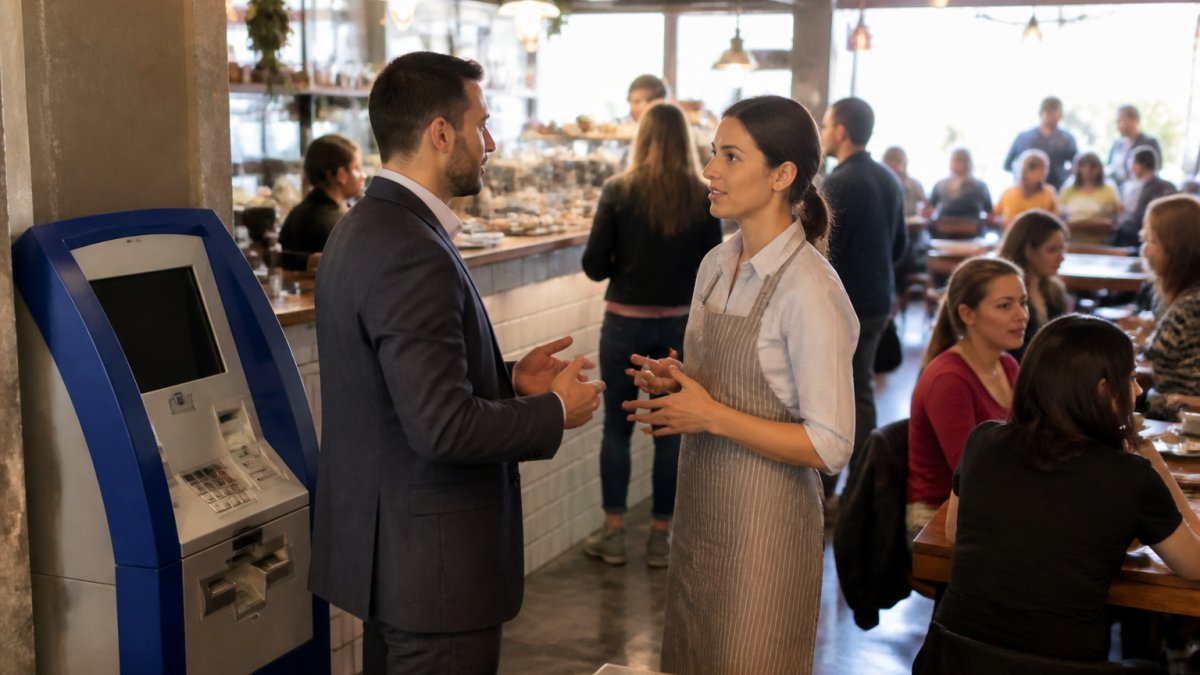
Never place a machine based on gut feeling. Validate demand first.
Ask the location owner these questions:
- How many customers visit daily or weekly?
- Do customers ask for ATM access or cash back?
- What's the average transaction size in their business?
Request permission to place a temporary machine for 2-4 weeks. Monitor transaction volume and average withdrawal amounts. If you see fewer than 80 transactions monthly, walk away.
Calculate your projected monthly profit:
- Estimated monthly transactions × $2.50 average surcharge = gross revenue
- Subtract 20-25% for processor fees and revenue share
- Subtract $150 for operating costs
Negotiating placement agreements
Put everything in writing. A placement agreement should include:
- Revenue split: Your percentage of surcharge fees (typically 65-80% to you, 20-35% to location)
- Term length: 1-3 years is standard
- Termination clause: Either party can exit with 30-60 days notice
Never rely on a handshake deal. Disputes over revenue splits or maintenance responsibilities destroy partnerships fast.
ATM Cash Loading and Management Essentials
Cash logistics are your biggest operational responsibility. Running out of cash stops revenue. Too much cash sitting in a machine creates security risk.
Planning your cash float and replenishment schedule
Start with enough cash to cover 2-3 weeks of peak withdrawals. If your machine processes 100 transactions monthly at $60 average withdrawal, you need $1,200-$1,800 in float.
Refill on a predictable schedule:
- High-traffic machines: Every 5-7 days
- Moderate-traffic machines: Every 10-14 days
- Low-traffic machines: Every 21-28 days
Track withdrawal patterns. Bars see higher volume Friday-Sunday. Casinos run steady 24/7. Adjust your refill schedule to match actual demand, not guesses.
Security and theft prevention
Cash in an ATM is a theft target. Implement these safeguards:
- Machine placement: Position machines in well-lit, high-visibility areas inside the business
- Security cameras: Verify the location has working surveillance covering the ATM
- Regular monitoring: Check transaction logs weekly for unusual activity
Work with your ATM processor to set withdrawal limits. Most machines allow you to restrict how much cash users can withdraw per transaction, which reduces loss exposure if the machine is compromised.
Is ATM Business Ownership Actually Semi-Passive Work
Here's the truth most guides skip: ATM ownership is semi-passive, not fully passive. You still work.
Daily responsibilities and time commitment
Expect to spend 1-2 hours per week per machine on average:
- Cash loading: 30-60 minutes per refill (1-2 times weekly)
- Transaction monitoring: 10-15 minutes daily via app or online portal
- Location check-ins: 15-30 minutes weekly to verify machine status
With five machines, you're looking at 5-10 hours per week. With ten machines, 10-20 hours. This scales, but it's not zero work.
Maintenance, monitoring, and troubleshooting
Machines break. When they do, your revenue stops.
Common issues:
- Cash jams: User error or mechanical failure stops dispensing
- Network connectivity: Cellular or internet outage prevents transactions
- Card reader failure: Machine can't read cards, users can't withdraw
Plan for 2-4 maintenance issues per machine annually. Most processors offer 24/7 support. Response time varies from same-day to 3-5 business days depending on your service level.
Budget $30-$60 monthly for maintenance costs and factor downtime into your profit projections.
Getting Started: Your Action Plan for ATM Business Success
Ready to launch? Follow this step-by-step approach.
Step 1: Calculate your target location and revenue goals
Define what success looks like before you buy equipment.
Example target:
- Monthly profit goal: $400 per machine
- At 80% net (after fees and splits): need $500 gross revenue monthly
- At $2.50 average surcharge: need 200 transactions monthly
Now search for locations that fit this profile. Bars, nightclubs, and casinos typically exceed 40 daily transactions. Quiet retail shops rarely hit this threshold.
Step 2: Source your ATM equipment and processor
Buy or lease your machine. Most owners buy used units to minimize capital.
Reputable sources include:
- ATM resellers specializing in used equipment
- Certified refurbished machines from manufacturers
- Online marketplaces with seller ratings and return policies
Select an ATM processor (the company that manages transactions and deposits). According to VettedBiz's 2026 franchise analysis, processor fees typically run $25-$50 monthly plus 5-10% of transaction volume.
Compare processors on:
- Monthly service fees
- Transaction fee percentage
- Deposit frequency (daily, weekly, monthly)
Step 3: Secure location agreements and install machines
Pitch high-traffic venues with a simple value proposition: they earn passive income, you handle everything.
Prepare a one-page proposal showing:
- How much they'll earn monthly (based on your research)
- Your maintenance and cash-loading responsibilities
- The revenue-share split (recommend 25-30% to them)
Once you secure a location, arrange installation. This typically takes 1-2 weeks and requires:
- Electrical outlet access
- Network connectivity (cellular or internet)
- Physical space for the machine
Step 4: Load cash, monitor transactions, and optimize
Launch with a full cash float and establish your refill schedule.
Monitor these metrics weekly:
- Total transactions
- Average withdrawal amount
- Machine uptime percentage
If a machine underperforms (fewer than 80 transactions monthly), consider relocating it or replacing the location partner.
Scale by reinvesting profits into additional machines. Most successful ATM operators run 5-10 machines within their first year, then decide whether to expand or stay at their comfort level.
Starting an ATM business requires upfront capital and ongoing cash management, but the semi-passive income potential appeals to entrepreneurs seeking diversified revenue. Our free ATM placement program includes full installation, maintenance, and 24/7 support for qualifying businesses, so you can focus on generating passive income while we handle the technical details.
Frequently Asked Questions
Are ATMs good passive income?
ATM machines can generate passive income, but the work is semi-passive rather than fully hands-off. Owners earn $200 to $700 per machine monthly in steady locations after expenses and revenue sharing. You'll need to load cash regularly, monitor transactions, and arrange occasional maintenance. The income potential depends heavily on location quality and foot traffic. Many business owners find it a worthwhile side income stream without requiring daily staffing.
How much does it cost to start an ATM business?
Startup costs for an ATM business include the machine purchase price, installation fees, and initial cash float. Ongoing expenses cover ATM processing fees, network connectivity costs, maintenance, and cash replenishment logistics. Some providers offer free placement with zero upfront equipment costs for qualifying businesses. Your total initial investment and monthly operating costs depend on machine type, location, and processor selection. Request a quote from your ATM provider to understand the specific costs for your situation.
How do ATM owners make money?
ATM owners earn revenue primarily through surcharge fees charged to customers for each withdrawal, typically $2 to $3.50 per transaction. You also split revenue with the business owner hosting your machine through a placement agreement. Income depends on transaction volume, a well-placed ATM generating 150-200 transactions monthly can produce $500 to $1,000 in monthly revenue before operating expenses. Your net profit is what remains after deducting processing fees, connectivity costs, maintenance, and the location partner's revenue share.
How much work does it take to manage an ATM?
Managing an ATM is semi-passive work. You must load cash into the machine regularly (weekly or bi-weekly depending on transaction volume), monitor transaction logs for issues, and arrange maintenance when needed. You'll also handle customer disputes and ensure the machine stays operational. Most owners spend 2-5 hours per week per machine on these tasks, depending on how many machines you operate. It's not a fully passive income source, but it doesn't require daily staffing or constant active involvement.