 Listicle
Best Merchant Services for Cafes in the United States
Quick Summary
The best merchant services for a cafe are providers with low per-transaction fees, offline payment support, and flexible contract terms, since cafes process many small counter sales. DCATMP offers no long-term contracts, no cancellation fees, and free terminals for qualifying businesses. Compare total monthly cost at your real sales volume before committing.
- Cafes process many small tickets, so fixed per-transaction fees cost them more than full-service restaurants.
- DCATMP offers no long-term contracts and no cancellation fees, according to the company.
- Ask every provider how its terminal handles internet outages during peak morning hours.
- Many providers add monthly, gateway, or statement fees that matter more than the headline rate.
- Request written quotes from at least three providers and compare total monthly cost at your volume.
Table of Contents
- Top Merchant Services for Cafes: Quick Comparison Table
- 1. DCATMP: Free Terminals and POS With No Long-Term Contract
- 2. Stax and Other Restaurant-Focused Processors: Where They Fit
- 3. Chase, PayPal, ConnectPay and Other Established Providers
- Understanding Merchant Services Fees and Cafe Credit Card Processing Costs
- Choosing the Right Cafe Payment Provider for Your Sales Mix
- Frequently Asked Questions
How Cafe Payments Differ From Standard Restaurant Processing
A cafe runs a different payment day than a full-service restaurant. Most transactions are small, many happen at a counter, and the rush is short and intense. Those patterns shape which merchant services make sense. This guide compares the options a US cafe owner is likely to consider and explains how fees and workflows differ across them.
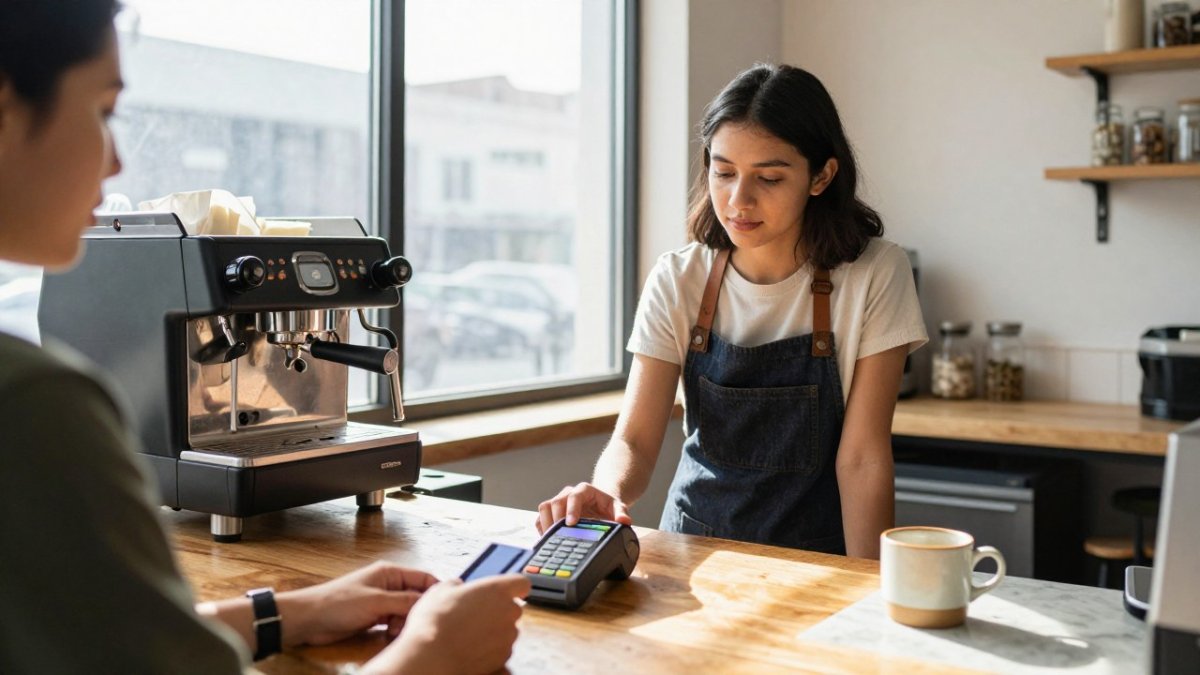
Cafes usually see many small transactions. A $4.50 latte and a $12 breakfast sandwich carry the same fixed per-transaction charges as a $200 dinner check. For that reason, a fixed per-transaction fee costs a cafe proportionally more than it costs a full-service restaurant. Counter-service workflows also mean the card reader often sits in front of the customer, and the order may be placed before payment. Table-service restaurants rarely work this way.
Peak-hour reliability matters too. A cafe may take a large share of its daily sales in a two-hour morning window. A terminal that drops connection or a POS that freezes during that window costs real money. Ask any provider how its system behaves when the internet goes down, and whether card payments can still be accepted offline.
Watch out: many providers quote a low rate, then add monthly, gateway, or statement fees that matter more than the headline number for a low-ticket business.
Top Merchant Services for Cafes: Quick Comparison Table
Here is how the providers covered below compare on the points most cafe owners ask about. Where the research did not verify a detail, the cell says so rather than guessing. The table is organized around cafe-relevant criteria: counter-service speed, offline mode, tip handling, and contract flexibility.
| Provider | Starting Price | Contract Terms | Hardware | Offline Payments | Best For |
|---|---|---|---|---|---|
| DCATMP | See pricing page | No long-term contracts or cancellation fees | Free terminals and POS for qualifying businesses | Not verified | Cafes wanting no-contract terms and free hardware |
| Stax | Not verified | Not verified | Not verified | Not verified | Higher-volume food-service businesses |
| Dharma Merchant Services | Contact for pricing | Not verified | Not verified | Not verified | Restaurant processing comparisons |
| CDGcommerce | Contact for pricing | Not verified | Not verified | Not verified | Restaurant processing comparisons |
| Chase Payment Solutions | Contact for pricing | Not verified | Not verified | Not verified | Owners who prefer a bank-affiliated provider |
| PayPal | Not verified | Not verified | Not verified | Not verified | Businesses that also sell online |
| ConnectPay | Contact for pricing | Not verified | Not verified | Not verified | Owners wanting providers beyond the common POS brands |
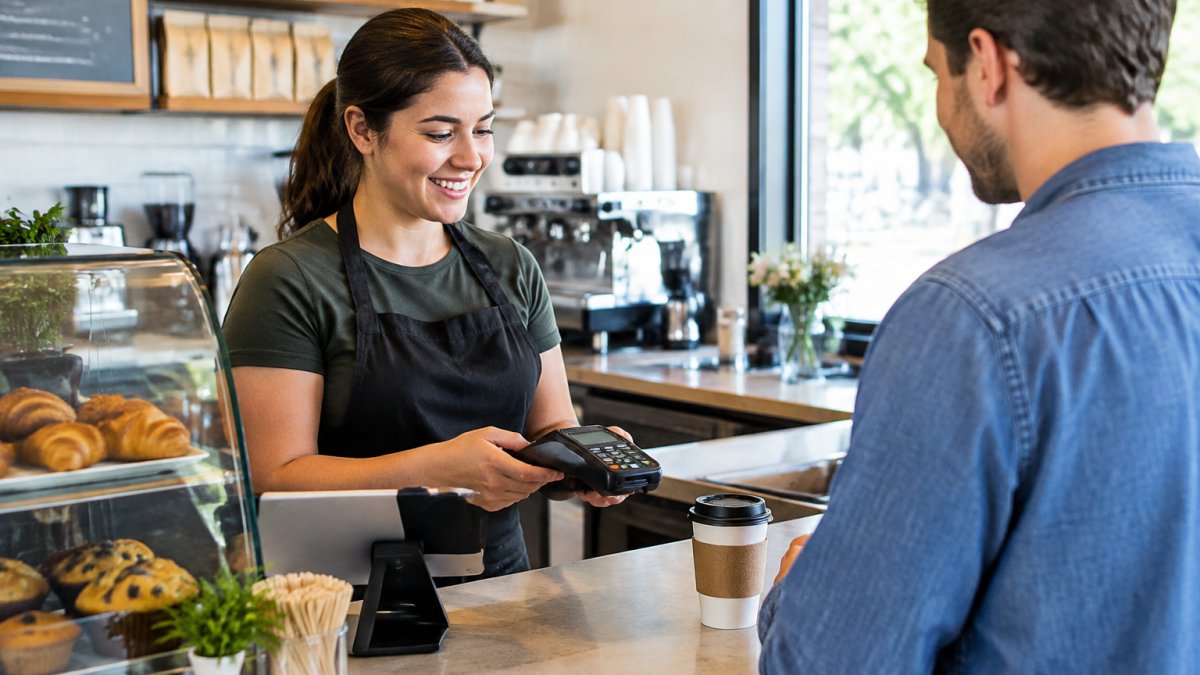
How to read this table for a cafe. A cafe's payment day is dominated by small, fast, card-present transactions at a counter, often with a tip prompt in front of the customer. That makes four columns matter more than the headline rate: per-transaction fixed fees (which hit small tickets hardest), offline mode (for peak-hour outages), tip and split-payment handling (for counter and hybrid service), and contract flexibility (for seasonal or evolving menus).
What competitors typically cover that this table adds. Most roundups compare providers on advertised rates and hardware alone. For a cafe, the more useful comparison is total cost at your actual sales mix plus reliability during the morning rush. Use the table as a shortlist, then run the cost model in the fees section below against your own average ticket and monthly card volume.
Cafe-specific integration checklist. Before you commit to any provider, confirm compatibility with the tools a cafe actually runs: menu and inventory management, loyalty and gift cards, accounting export, online ordering, and delivery workflows. A provider that lacks a clean integration with your loyalty or online-ordering stack will cost more in staff time than it saves in processing fees. Ask each provider for a written list of supported integrations and test the ones you rely on during a trial period.
Peak-hour reliability and offline handling. A cafe may take a large share of daily sales in a two-hour morning window. Ask every provider how its terminal behaves when the internet drops, whether card payments can still be accepted offline, and how offline transactions sync when connectivity returns. Also ask about support response times during peak hours, since a slow support queue at 8 a.m. is a real cost.
Tipping, split payments, and staff workflows. Counter-service cafes often present a tip prompt to the customer, and hybrid cafes may need split checks or tip pooling. Confirm how each provider handles tip prompts, tip pooling, employee permissions, shift closeout, and split payments, because these workflows affect both staff speed and customer experience.
Contract and risk details. Beyond the advertised rate, compare contract length, cancellation fees, funding delays, chargeback handling, reserve requirements, and PCI responsibilities. A no-contract provider can be a better fit for a cafe that may change its menu or service model, but only if the other terms are also favorable.
Watch out: a low headline rate can hide monthly, gateway, or statement fees that matter more for a low-ticket business, so compare total monthly cost at your real volume rather than the advertised percentage.
1. DCATMP: Free Terminals and POS With No Long-Term Contract
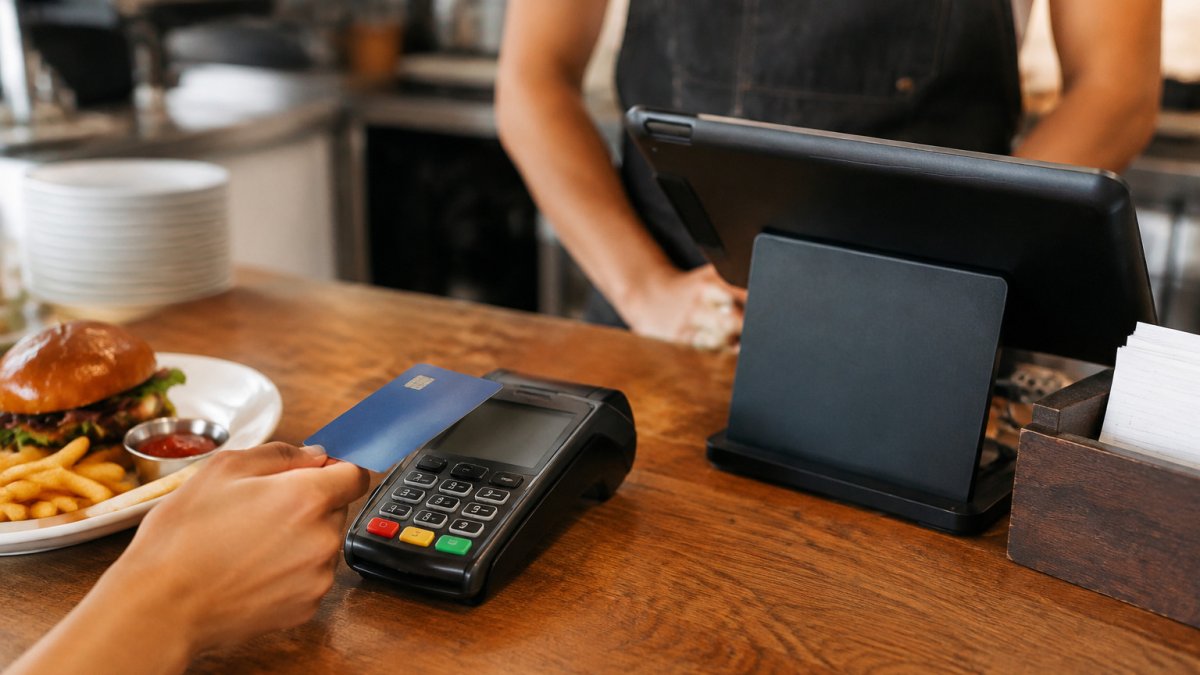
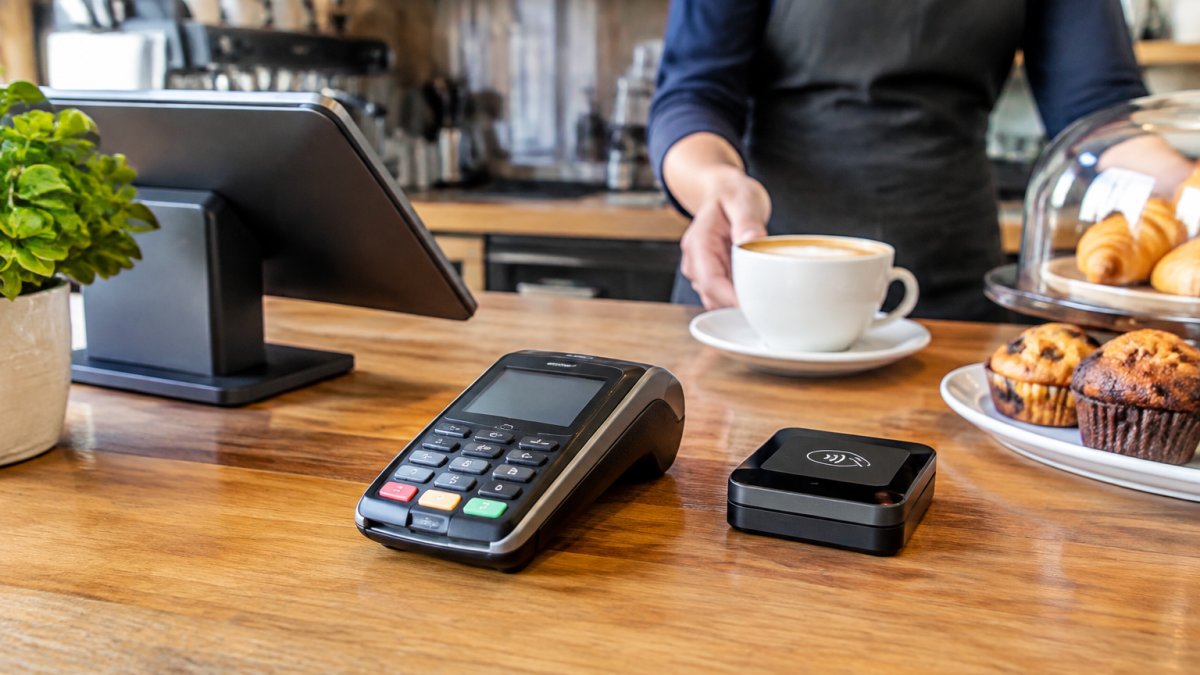
DCATMP offers no long-term contracts, no cancellation fees, and no upfront equipment costs for qualifying businesses, with more than 20 years of experience. You can review the free credit card terminal details to see what hardware is included.
Those no-contract terms matter for a cafe that may want to switch providers later. For a full look at whether contract-free merchant services fit your situation, see our guide on whether merchant services without long-term contracts are worth it.
Pros: no long-term contract or cancellation fee, 24/7 availability, and fast funding with no credit check, according to the company.
Cons: pricing depends on your volume, card mix, and equipment, so review the DCATMP pricing page and compare actual per-transaction and monthly costs against your sales mix.
Best for: cafes that want hardware and contract flexibility from one provider.
Our team at DCATMP can walk you through current terms. Visit our merchant services page for more detail on the service.
2. Stax and Other Restaurant-Focused Processors: Where They Fit
Dharma Merchant Services and CDGcommerce both appear in restaurant-processing comparisons. Neither source verified their rates or POS capabilities, so ask each for a full fee schedule.
3. Chase, PayPal, ConnectPay and Other Established Providers
For a broader side-by-side look at restaurant options, read our restaurant processing comparison of seven options ... [note: link follows] (Credit Card Processing for Restaurants: 7 Options Compared).
The research did not supply cafe-specific features, rates, or contract terms for these providers. Request those details in writing before deciding.
Understanding Merchant Services Fees and Cafe Credit Card Processing Costs
Processing fees usually combine a percentage of each sale with a fixed per-transaction charge. For a cafe, the fixed part hurts more because average tickets are small. The way to compare providers is to model total cost at your real sales mix, not to compare headline rates. This section walks through a cafe-specific cost model that most generic restaurant roundups skip.
Step 1: Gather your real numbers. Pull four figures from your POS or statements: average ticket, monthly card volume, monthly transaction count, and the share of sales that are card-present versus online or keyed. A cafe with a $6 average ticket and 3,000 monthly transactions has a very different cost profile than a full-service restaurant with a $60 average ticket and 300 transactions, even at the same card volume.
Step 2: Separate the fixed and percentage components. For each provider, list the percentage rate and the per-transaction fee for card-present sales, then add any monthly, statement, or gateway fees. The per-transaction fee is where small-ticket cafes feel the most pain: a fixed per-transaction fee takes a larger share of a small ticket than of a large one. That is why a provider with a slightly higher percentage rate but a lower per-transaction fee can win for a cafe.
Step 3: Model effective cost at your volume. Multiply your monthly transaction count by the per-transaction fee, add the percentage rate applied to monthly card volume, and add monthly and gateway fees. Divide the total by monthly card volume to get your effective rate. Run this for at least three providers using the same inputs so the comparison is apples to apples. A common pattern is that the provider with the lowest advertised rate is not the lowest effective cost once fixed fees are included.
Step 4: Account for keyed and online sales. Keyed or online transactions usually carry higher rates and may carry different per-transaction fees. If your cafe takes phone orders, online orders, or delivery orders, model that share separately rather than applying the card-present rate to all volume.
Step 5: Add the non-rate costs. Funding delays, chargeback fees, reserve requirements, and PCI compliance fees can change the total. Ask each provider for a full fee schedule in writing, including cancellation and early-termination terms, and compare the total monthly cost at your real volume.
Ask every provider for:
- The per-transaction rate for card-present sales
- Any monthly, statement, or gateway fees
- Cancellation or early-termination terms
- Funding timelines
- Chargeback and reserve terms
- PCI compliance responsibilities
Watch out: hidden charges on your statement, such as statement fees, batch fees, or PCI non-compliance fees, can erase the savings from a lower rate, so review a sample statement line by line before you sign. Our guide on how to avoid hidden credit card fees covers what to look for.
PCI Security Standards Council guidance on payment card security
Choosing the Right Cafe Payment Provider for Your Sales Mix
Start with your sales pattern. If most transactions are under $10 and happen at a counter, prioritize low fixed fees and a terminal that works in a busy line. If you also take online orders, check how each provider handles online payments.
Next, confirm the hardware and contract terms before you commit. A free terminal means little if the cancellation terms are costly. A no-contract provider can be a good choice for a cafe that wants room to change later.
Finally, compare total monthly cost at your real volume. Request written quotes from at least three providers and put the numbers side by side.
Frequently Asked Questions
What are the top 5 merchant services for cafes?
The supplied research names several providers rather than a verified top five, including DCATMP, Stax, Dharma Merchant Services, CDGcommerce, Chase Payment Solutions, PayPal and ConnectPay. Because the research does not verify their rates or cafe-specific features, compare each provider's current pricing page or request a quote before deciding. Focus on card-present rates, monthly fees, contract terms and whether the provider's POS works with your counter-service workflow.
How much do merchant services cost for a cafe?
Pricing depends on your monthly card volume, average ticket size, card mix and the equipment you choose, so no single figure applies to every cafe. The research does not verify specific rates for these providers. Ask each provider for an itemized quote covering processing rates, monthly fees, setup costs and any cancellation terms, then model those numbers against your own monthly sales.
Can cafes use the same payment processor for in-person and online orders?
Many cafes do use one processor for both, which keeps reporting in one place and reduces reconciliation work. Confirm that the provider supports both card-present transactions at the counter and card-not-present transactions for online ordering, and check whether its POS integrates with your online ordering tool. Ask about PCI compliance and how chargebacks are handled for each channel.
What should a cafe look for in a payment processor?
Look for a clear fee structure, reliable card-present acceptance during peak hours, POS hardware that fits counter or table service, and support you can reach during open hours. Check contract length and cancellation fees, funding timelines, and whether the provider handles tipping and split payments well. Ask how the system behaves if the internet goes down during a rush.